/ Healthcare Technology
Free DICOM Router for SATUSEHAT Radiology — But Here's What to Count
The DICOM Router from Kemkes is indeed free. But the total cost of setup, server, and maintenance is not. Learn what to calculate before choosing your approach to radiology data transmission to SATUSEHAT.
Quick answer
What to know before reading further
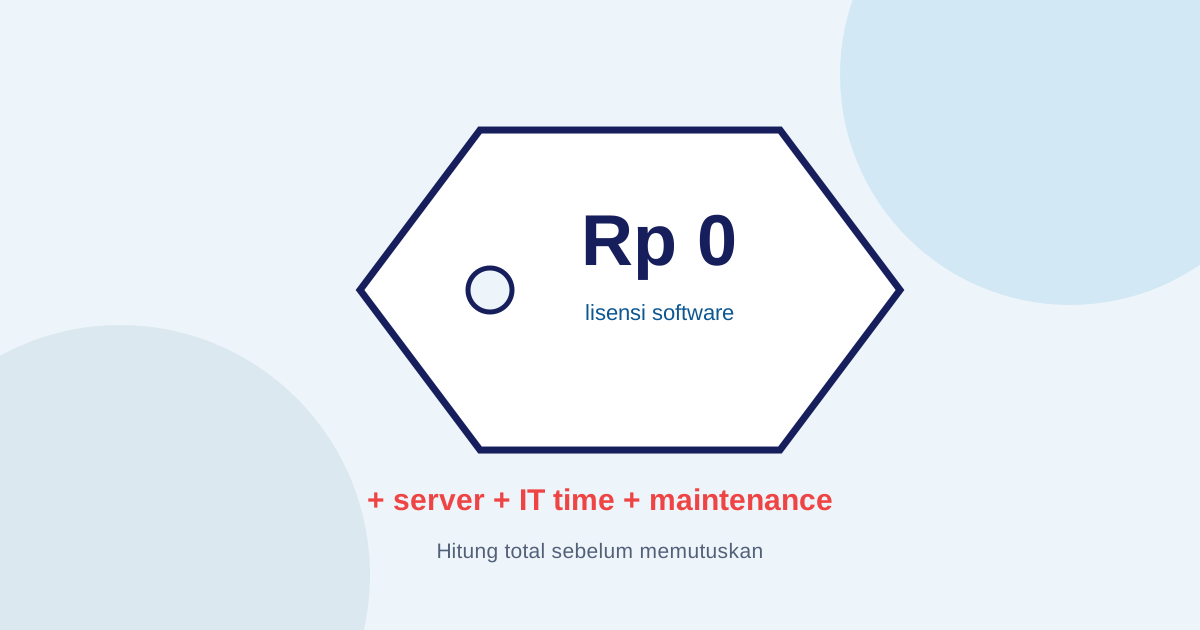
- The DICOM Router from Kemkes is free software, but the server, IT time, and maintenance are not.
- There are options that include SATUSEHAT routing as part of the service — with a free tier that requires no dedicated server.
The router is free. That doesn’t mean there’s no cost.
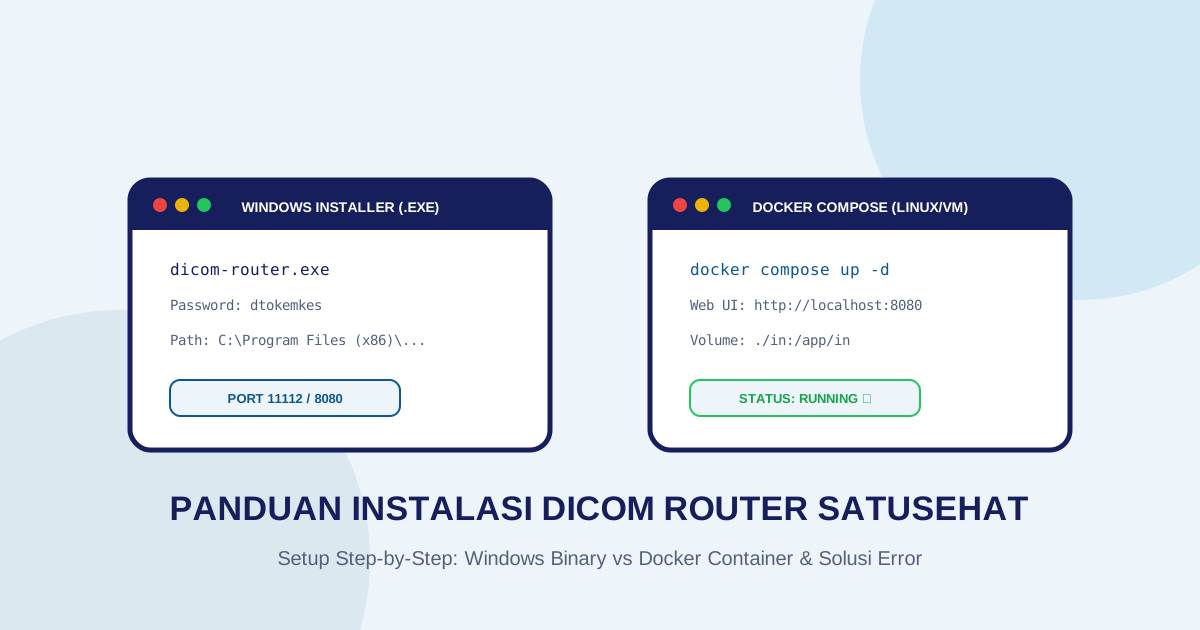
When an IT team receives instructions to integrate radiology data with SATUSEHAT, one of the first things they find is the DICOM Router from Kemkes. The software is freely available — downloadable via the SATUSEHAT API, with Docker and Windows installer versions, plus technical documentation.
Free is an attractive word. But before deciding this is a zero-cost solution, it’s worth calculating all the components involved.
What’s actually free about the DICOM Router?
One thing: the software license. Kemkes provides the DICOM Router as a free tool to help healthcare facilities transmit radiology data to SATUSEHAT. No subscription fees, no per-seat licensing costs.
That’s it.
Everything else needed for the DICOM Router to run operationally — that isn’t free.
Costs that are often not counted
1. Dedicated Server or Computer
The DICOM Router needs to run continuously on a computer or server. Running it on the same machine as the PACS creates resource conflict risks. Running it on a separate server means hardware costs or cloud server costs.
For an on-premises physical server, this means a one-time hardware investment. For a cloud server, this means ongoing monthly costs — roughly Rp 200,000–500,000/month for a server with adequate specs.
2. IT Team Time for Setup
Setting up the DICOM Router is not a one-click process. Depending on the complexity of existing infrastructure, the process can take several hours to several days.
Things that frequently take longer than expected:
- Debugging Windows LongPath errors
- Adjusting AE Title configuration to match the existing PACS
- Ensuring no port conflicts with other applications
- Testing connections between the modality, PACS, and DICOM Router
- Verifying that data reaches SATUSEHAT correctly
IT team time is a real cost — especially for facilities with small IT teams already stretched thin with other responsibilities.
3. Storage for the /app/in Folder
The DICOM Router stores DICOM files temporarily in the /app/in folder before processing and forwarding them to SATUSEHAT. These files don’t automatically delete — at least not with a clearly documented mechanism.
For facilities with significant examination volume, this folder can grow quickly. A cleanup mechanism needs to be in place — a cron job, task scheduler, or manual script — which means additional setup time and regular IT attention.
4. Long-Term Monitoring and Maintenance
The DICOM Router needs to be monitored. If the router stops running — due to a server restart, Windows update, or network issue — DICOM files won’t be sent to SATUSEHAT, and the radiology team won’t know until someone notices the data isn’t coming in.
There’s no built-in monitoring dashboard for the DICOM Router. Monitoring must be done manually or with additional tools that need to be configured separately.
Total cost of ownership: more than zero
When adding up all operational components in a Total Cost of Ownership (TCO) calculation:
| Infrastructure Component | Estimated Cost | Operational Impact |
|---|---|---|
| Software License | Rp 0 | Free to download and use from Kemkes |
| Server / Cloud VM | Rp 200,000 – 500,000 / month | Requires a dedicated instance & public IP |
| IT Setup & Integration | 4 – 16 hours (IT time) | Configuring AE Titles, LongPath, and Ports |
| Maintenance & Monitoring | 1 – 2 hours / month | Log inspection, service restarts & troubleshooting |
| Storage Management | Volume dependent | /app/in folder requires periodic cleanup |
“Free DICOM Router” is technically accurate — but the complete and honest statement is: the DICOM Router is free to license, but carries real costs in infrastructure and operational labor.
When does self-managed setup still make sense?
There are situations where setting up your own DICOM Router is genuinely the best choice:
- The facility already has an existing PACS with significant investment and doesn’t want to replace infrastructure
- The IT team has capacity and familiarity with Docker or Linux server management
- Full control over routing configuration and data storage is required
- Examination volume is high enough that cloud platform costs exceed self-hosted server costs
Outside of these conditions — especially for type C/D hospitals or clinics with limited IT teams — there’s another approach worth considering.
An alternative that removes several cost components
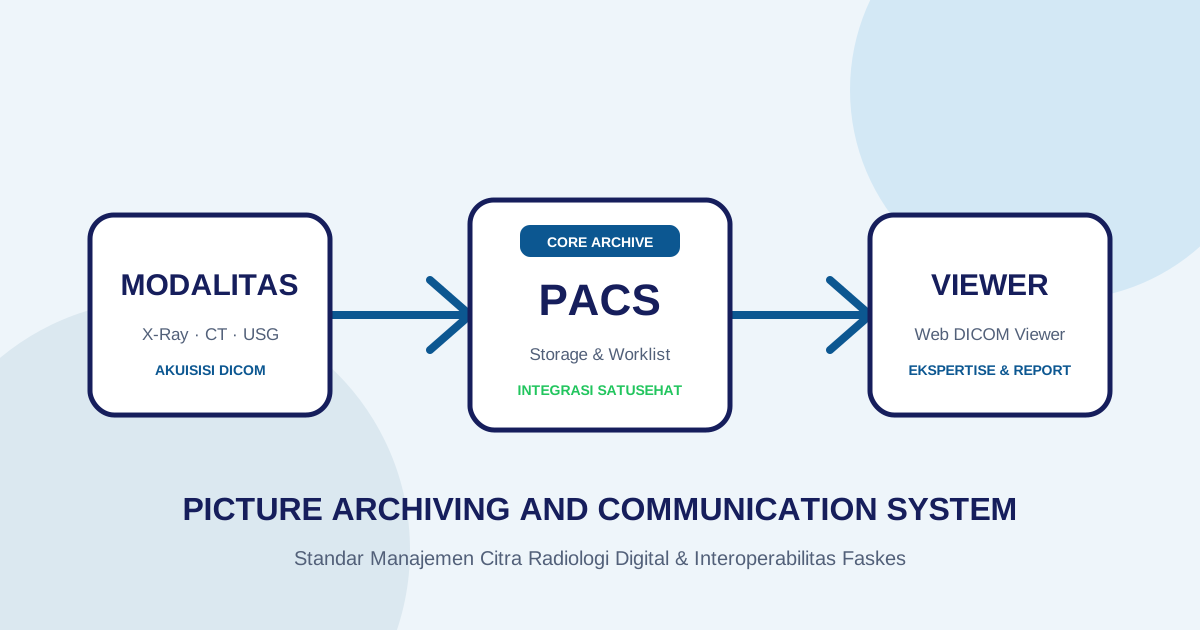
Some cloud-native PACS platforms include SATUSEHAT routing as part of the service — not as an add-on that needs separate configuration.
With this approach:
- No DICOM Router server to prepare
- No
/app/infolder to clean up - No AE Title configuration to adjust
- Transmission status monitoring is available as part of the platform
Free tiers from some of these platforms cover a limited number of examinations per month — enough for small facilities or for an evaluation period before committing to a paid plan.
What to evaluate before deciding
Before choosing an approach, answer these questions:
- Does the IT team have the time and capacity for setup and maintenance of additional components?
- Is there already a dedicated server available, or will new investment be required?
- How many radiology examinations per month? Does the volume fit a platform free tier, or will a paid plan be needed?
- Is the existing PACS already integrated, or will reconfiguration be needed?
- Who will monitor when the DICOM Router or SATUSEHAT connection has issues?
Answers to these questions will determine which option fits best — not just which one looks cheapest on the surface.
Imagestro-PACS includes SATUSEHAT routing as part of the platform, including in the free tier for facilities with limited volume. No separate DICOM Router server needs to be set up or managed. Capacity details and approach comparisons are available directly at imagestro.satupintudigital.co.id.
Key terms
Quick glossary
- DICOM Router
- Software that receives DICOM files from a PACS or modality and forwards them to SATUSEHAT NIDR.
- Total Cost of Ownership (TCO)
- Total ownership cost that includes not just licensing fees, but also setup, operational, and maintenance costs over the usage period.
- NIDR
- National Imaging Data Repository — the DICOM data storage infrastructure within the SATUSEHAT ecosystem.
- Free tier
- A no-cost service tier with limited capacity that allows facilities to try a service before committing to a paid plan.
Frequently asked
Questions teams ask before implementation
- Is the DICOM Router from Kemkes truly free?
- The software is yes, free to download and use. But to run it, you need a dedicated server or computer, stable internet connection, and IT team time for setup and maintenance. These operational costs are not included in the software's "free" status.
- Are there PACS options with a free tier that include SATUSEHAT routing?
- Yes. Some cloud-native PACS platforms offer free tiers that include SATUSEHAT routing as part of the service, without needing to set up your own infrastructure. Free tiers are typically limited by number of orders or storage per month.
- When does setting up your own DICOM Router make more sense?
- Self-managed setup makes sense when the facility already has an existing PACS with significant investment, has an IT team familiar with Docker or Linux, and needs full control over routing configuration. For facilities just starting out or with limited IT capacity, integrated platforms are usually more efficient.
Transmit Radiology to SATUSEHAT Without the Setup Hassle
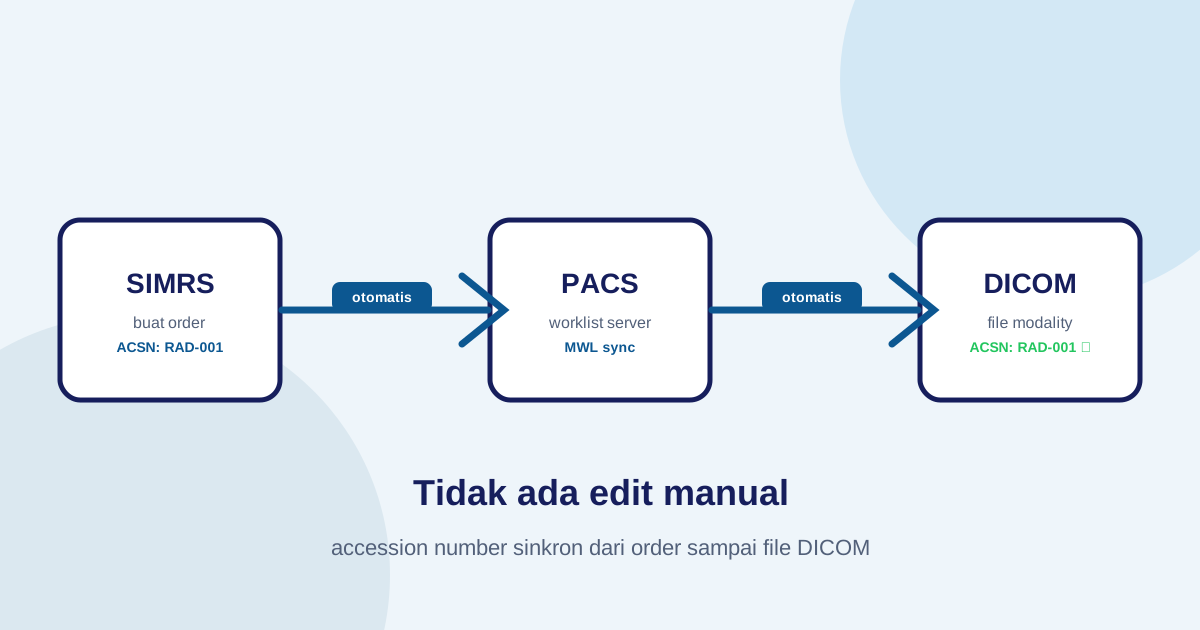
Connect your clinical imaging workflow—from modality worklists and automated accession numbers to web DICOM viewing and SATUSEHAT synchronization. Free Tier available for clinics and hospitals.
Content cluster